

BrowserStack vs Playwright: which testing layer do you actually need?
A practical BrowserStack vs Playwright comparison for CI, real-device coverage, private environments, debugging, ownership, and total operating effort.
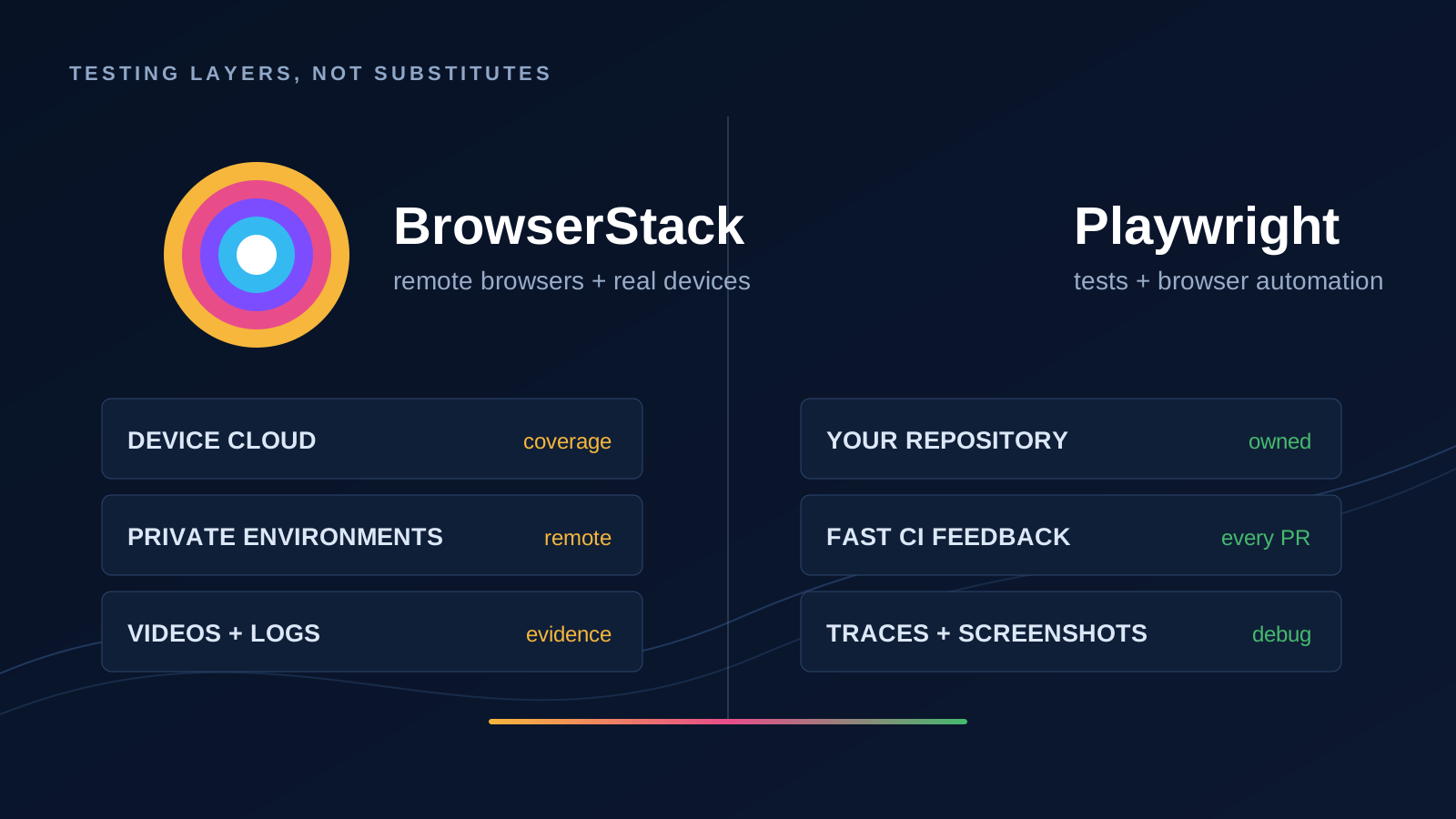
BrowserStack and Playwright are often compared as if one replaces the other. In practice, Playwright is the automation framework and BrowserStack is an execution environment. Many strong test systems use both, but not for every test and not from day one.
Choose Playwright first when release feedback must be fast
Playwright runs Chromium, Firefox, and WebKit in your own CI. That makes it a strong default for pull-request checks, repeatable end-to-end flows, screenshots, traces, and tests against controlled browser versions. The suite stays in your repository and can run anywhere your build agents run.
Add BrowserStack when the device itself is part of the risk
BrowserStack's value is its remote browser and device estate. Its Playwright integration adds broad operating-system and browser combinations, parallel execution, videos, logs, and access to private environments through Local Testing. That matters when defects depend on a real device, an older browser, or a production-like network path.
A useful split for most teams
- Run the critical path in Playwright on every pull request
- Run broader browser combinations after merge or on a schedule
- Reserve real-device runs for journeys where hardware or mobile browsers change behaviour
- Keep failure evidence in one release view so engineers do not chase results across tools
The failure mode is buying a device cloud before the suite is trustworthy
More environments do not repair flaky selectors, shared test state, unclear ownership, or a suite that nobody uses to make release decisions. First make a small critical path deterministic. Then spend remote-device minutes where they reduce a known risk.
Where ResoluteX fits
QAShift establishes the operating model and automation. Verity gives functional, accessibility, security, and static checks one release verdict. BrowserStack can remain one execution provider inside that system when real-device coverage is justified. The point is not to replace every tool; it is to make every tool answer one release question.
Have the problem this post describes? The AI Architect will match it to a product or practice — with a price.
Run the AI Architect